Not Just the Brewer: The Surprising Careers That Keep Craft Beer Alive
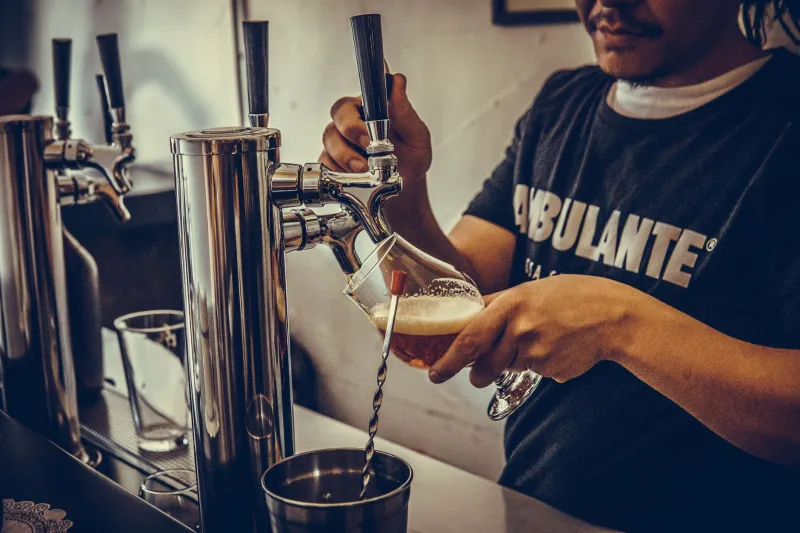
Walk into a busy taproom on a Friday evening and watch what's actually happening.
Yeah, there's probably a brewer somewhere in the back, elbow-deep in a batch of pale ale. But look closer. There's someone behind the bar who can explain the difference between a West Coast IPA and a hazy in under thirty seconds without making you feel dumb. There's a person at a corner table with a laptop running social media analytics. Out back, a technician is recalibrating a canning line. In a small office, someone is on the phone with a distributor working out a delivery schedule for three counties.
Craft beer is a full-stack industry. And for every brewer, there are four or five other people whose work is just as essential—and whose career paths are a lot more interesting than most people realize.
The Taproom Manager: Part Host, Part Operator, Part Brand Ambassador
If the head brewer is the creative soul of a craft brewery, the taproom manager is its beating heart.
This role gets undersold constantly. On paper, it sounds like bar management. In practice, it's one of the most demanding and multifaceted jobs in the building. A great taproom manager is simultaneously a hospitality professional, an inventory controller, a staff trainer, a community liaison, and often the primary face of the brand to the public.
The best ones develop an almost encyclopedic knowledge of the beers on tap—not because they're required to, but because they genuinely love it. They remember regulars' names. They handle a bad review on Yelp with grace. They coordinate with the brewery team on which kegs are moving and which are collecting dust, feeding real-time consumer feedback directly back into production decisions.
And a lot of them move up. Taproom managers who've built strong customer relationships and deep brand knowledge often transition into regional sales roles, brand ambassador positions, or even brewery ownership. It's one of the most natural on-ramps into the broader craft beer industry for people who don't have a brewing background.
Quality Control: The Unsung Science of Consistent Beer
Here's something most casual beer drinkers don't think about: consistency is hard.
Brewing the same beer to the same standard, batch after batch, month after month, across different seasons and ingredient variations—that requires systematic, rigorous quality control. And the specialists who do this work are genuinely invaluable.
QC roles in craft breweries combine microbiology, sensory science, and data analysis. A quality control specialist might spend their morning running dissolved oxygen measurements on packaged cans, their afternoon evaluating a new batch against a flavor standard, and their evening reviewing fermentation logs to troubleshoot a batch that finished a little high on gravity.
Many of these professionals come from food science or biology backgrounds. Some are former homebrewers who discovered they had a talent for the analytical side of the craft. The role is growing fast as the industry matures and consumers expect the same beer experience every single time they crack a can.
Marketing and Brand Storytelling: Turning Culture Into Connection
Craft beer lives and dies on identity. Walk down the cooler aisle of any well-stocked bottle shop and you'll see fifty different labels competing for your attention. The ones that win aren't always the ones with the best liquid—they're the ones with the most compelling story.
Marketing roles in craft breweries are fascinating because they sit at the intersection of creativity, community, and commerce. A brewery marketing director isn't just running Instagram ads. They're developing the narrative architecture of the brand—deciding what the brewery stands for, who it's talking to, and how it shows up at every touchpoint from the tap handle to the merch table.
This often means working closely with the brewing team to translate technical decisions into accessible stories. Why did the brewer choose this particular hop variety? What's the history behind the beer's name? What does this limited release mean in the context of the brewery's philosophy? Good marketing in craft beer isn't spin—it's translation.
Some of the sharpest brewery marketers came from totally unrelated fields: journalism, graphic design, event production, even teaching. The common thread is a genuine love for the culture and an instinct for authentic communication.
Equipment Technicians: The People Who Keep Everything Running
There is no beer without working equipment. Full stop.
Brewery equipment technicians are the people who make sure the pumps keep pumping, the glycol system holds temperature, the canning line doesn't jam at 3 PM on a Saturday when the taproom is packed. They're part mechanical engineer, part electrician, part improvisation artist.
This is a career path that often goes completely unacknowledged in conversations about craft beer, but the demand for skilled brewery technicians has grown dramatically as the industry has scaled. Larger regional breweries run sophisticated, heavily automated production floors that require dedicated technical staff. Smaller operations often contract with independent technicians who specialize in craft brewing equipment.
For people with backgrounds in industrial maintenance, HVAC, or food processing equipment, craft brewing offers a genuinely appealing entry point—work that's technically demanding, constantly varied, and surrounded by a culture that actually appreciates what you do.
Sales and Distribution: The Road Warriors of Craft Beer
Once a beer leaves the taproom, someone has to sell it.
Brewery sales reps are out there every day—visiting bars, restaurants, and bottle shops, building relationships with buyers, pouring samples, explaining why this IPA deserves a tap handle over the twelve other options the account is already considering. It's relationship-driven, physically demanding, and requires a combination of product knowledge and people skills that's surprisingly rare.
Distribution managers, who coordinate the logistics of getting beer from the loading dock to accounts across a region, are equally critical. They're managing temperature-sensitive products, navigating the three-tier distribution system's many quirks, and making sure the freshest possible beer is on shelves at all times.
Both roles offer real career development. Many brewery sales professionals eventually move into VP of Sales positions, regional director roles, or use their industry knowledge to launch their own operations.
The Takeaway for Anyone Thinking About This Industry
Craft beer is a community. And communities need all kinds of people.
If you've ever stood at a taproom bar and thought, I'd love to be part of this somehow—know that the path in might not look like what you expect. You don't have to be a brewer. You don't have to know the difference between a turbid mash and a step mash on day one.
You might be a natural taproom manager. You might have a quality control brain. You might be the person who finally figures out how to tell a brewery's story in a way that makes people feel something.
The best craft breweries are full of people who found their way in through an unexpected door. The industry is richer for it—and so is the beer.