There's No Such Thing as a Lucky Batch: The Hard Systems Behind Craft Brewery Success
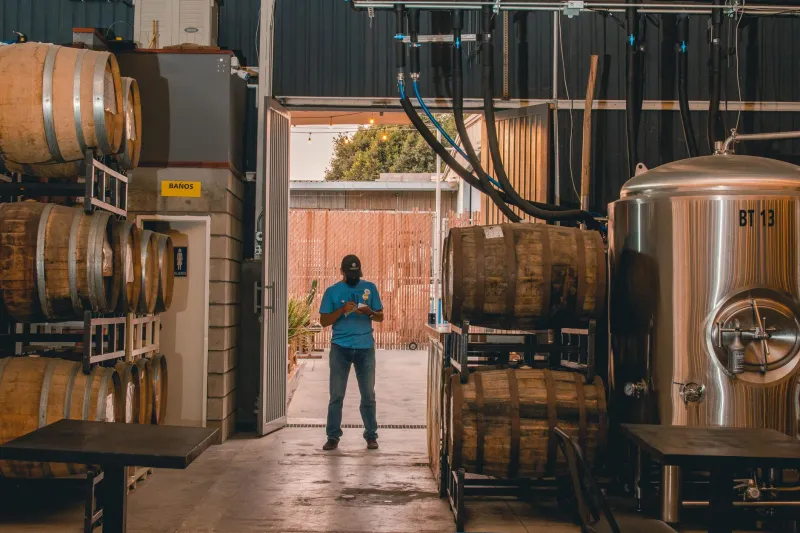
Ask a successful head brewer how their brewery made it, and somewhere in the answer you'll hear the word lucky. Lucky to find the right location. Lucky the first batch landed well. Lucky the taproom caught on when it did. It's a humble thing to say, and it sounds good in interviews. But spend enough time around the people actually running these operations—the ones elbow-deep in grain bills at 5 a.m., renegotiating hop contracts in October, and tracking fermentation logs like air traffic controllers—and a different picture emerges entirely.
Luck, it turns out, is mostly a polite lie that successful breweries tell about themselves.
The Mythology Gets Built After the Fact
Human beings are wired to find patterns, and we're especially good at retrofitting narratives onto outcomes. A brewery opens, survives its brutal first three years, builds a loyal following, and suddenly the origin story gets smoothed into something cinematic: a homebrewer with a dream, a garage, a leap of faith. What gets edited out is the spreadsheet work. The risk modeling. The fifteen-batch pilot program before a single keg ever hit a tap handle.
"People love the romance of it," says one head brewer who runs a mid-size operation in the Pacific Northwest. "They want to hear that I just followed my gut. But the truth is I built a sourcing matrix for our hops two years before we opened. I had three backup suppliers for every key ingredient. That's not a gut feeling—that's a system."
This is the gap between the story and the infrastructure. And it matters, because when newer breweries buy into the luck narrative, they skip the infrastructure.
Ingredient Sourcing Isn't Romantic, But It's Everything
One of the least glamorous—and most consequential—decisions a brewery makes is where its ingredients come from and what happens when those sources dry up. Hops are notoriously volatile. A single bad growing season in the Yakima Valley or Bavaria can spike prices and crater availability. The breweries that weather those disruptions aren't the ones that got lucky with the harvest. They're the ones that locked in multi-year contracts, diversified across growing regions, and built relationships with farmers years before they needed to call in a favor.
Malt sourcing follows similar logic. The craft breweries leaning into local grain—working with regional maltsters in the Midwest, the mid-Atlantic, or the Mountain West—aren't doing it purely for the story. They're building supply chain resilience into their identity. When you're sourcing from a maltster two counties over, you have a conversation, not a commodity transaction. That relationship is a buffer.
"Every ingredient decision is also a risk management decision," one production manager explained. "We don't just ask 'does this taste good?' We ask 'can we get this consistently for the next 24 months?' If the answer is no, we think hard before it goes on our core lineup."
Fermentation Science Is Where Romantics Go to Get Humbled
Brewing culture loves to celebrate the artistic side of the craft—the nose, the palate, the brewer's intuition. And those things matter. But fermentation is also chemistry, and chemistry doesn't care about your instincts. The breweries producing consistent, high-quality beer year after year have invested in the science: precise temperature control, rigorous yeast management programs, documented cell counts, and off-flavor training for their entire team.
Yeast, in particular, is where a lot of well-intentioned breweries get into trouble. Underpitching, overpitching, stressing a strain through inconsistent temperatures—these aren't bad luck. They're process failures. The operations that get it right have written protocols, not just experienced brewers. They can hand those protocols to a new hire and get the same result.
That kind of replicability isn't exciting to talk about at a taproom bar. But it's the difference between a beer that wins a loyal following and one that's "good when you get a good batch."
Distribution Strategy Is Calculated Risk, Not a Coin Flip
For a lot of craft breweries, the distribution question arrives like a crossroads: stay hyperlocal and own your margins, or push into wider distribution and chase volume. The breweries that have navigated this well didn't flip a coin. They modeled it.
They looked at their taproom revenue per barrel versus their wholesale margin. They mapped out which markets had density of their target drinker and which had already been saturated by better-capitalized regional players. They asked hard questions about whether their brand had the identity to survive on a shelf without a bartender to tell its story.
Some of the smartest moves in craft beer have been deliberate contractions—breweries that pulled back from distribution to protect taproom culture and margin. That's not luck. That's a calculated retreat based on real numbers.
Customer Retention Is a System, Not a Vibe
The taprooms that feel like community institutions—where regulars know the staff, where the beer club has a waitlist, where people bring their out-of-town guests like it's a point of local pride—those places didn't stumble into that culture. They built it.
Mug clubs, loyalty programs, first-access perks for limited releases, consistent event programming, staff trained to remember faces and names: these are retention systems. They're designed. The warm, effortless feeling of belonging that a great taproom creates is the output of a lot of deliberate, unglamorous work happening behind the scenes.
"We track everything," admits one taproom manager at a brewery that's been operating for nearly a decade. "Visit frequency, average spend, which events drive return visits. People think we're just a chill neighborhood spot. And we are—but we also know exactly what's working and why."
What 'Lucky' Actually Means
None of this is to say that chance plays zero role in a brewery's story. Being in the right city when craft beer started booming, landing a write-up from a well-read publication, having a competitor close right before you opened—these things happen, and they matter. Timing is real.
But timing is also something you can position yourself to take advantage of. The breweries that caught a wave caught it because they were already in the water, paddling hard, with the right board under them. Preparation doesn't eliminate chance. It just makes you ready when chance shows up.
The luck myth is comfortable because it lets everyone off the hook—the brewery that made it gets to seem humble, and the brewery that didn't gets to blame the universe. The harder, more honest story is that survival in craft beer is mostly a function of systems, relationships, discipline, and the willingness to do the boring work that nobody puts on a tap handle label.
At Lucky Town, we've always believed that the name is a little bit of a joke on ourselves. Because after years of watching great breweries get built and bad ones fold, one thing is pretty clear: the lucky ones worked the hardest to make their own luck. Every single time.