Rolling the Dice on a New Release: How Smart Brewers Turn Uncertainty Into Strategy
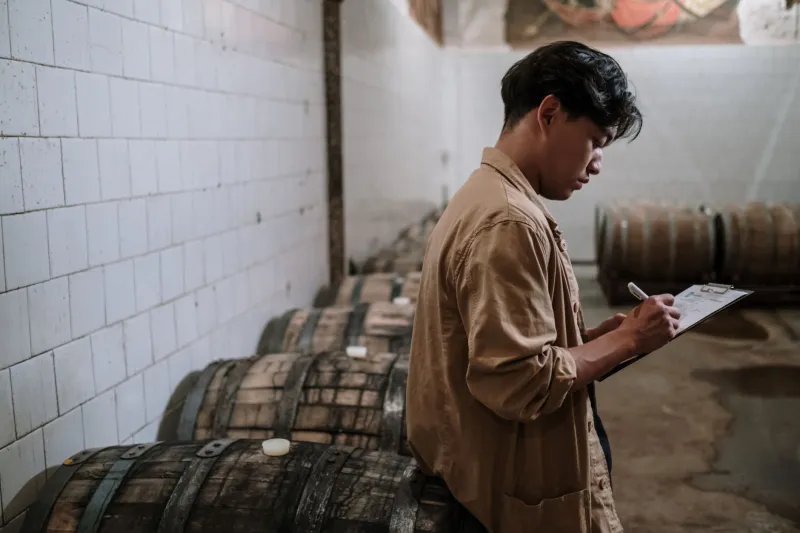
There's a version of the craft brewery story that gets told a lot — the one where a brewer pulls a rabbit out of a hat, releases something wild on a Tuesday, and the line wraps around the block by Friday. It's a good story. It's also mostly fiction.
The reality of a beer release is messier, more calculated, and honestly a lot more interesting than a lucky break. Behind every successful launch is a set of decisions — some data-driven, some gut-driven, and a few that even the brewers themselves can't fully explain. We talked to head brewers across the country about how they actually think through what to release, when to release it, and how much of it to make. What we found wasn't luck. It was something closer to controlled gambling.
The Myth of the Happy Accident
Ask any experienced brewer whether their best release was a surprise, and most will pause before answering. Not because they're being modest — but because the honest answer is complicated.
"People want to believe we just threw some hops together and magic happened," says one head brewer who's been running a production facility in the Pacific Northwest for over a decade. "But every release we've done that really landed — there was a reason. We'd been watching what people were drinking. We knew the timing. We didn't just get lucky."
That's not to say surprises don't happen. They absolutely do. But the brewers who consistently put out beers that sell through quickly, generate buzz, and build loyal followings aren't riding lightning. They're reading patterns.
Reading the Room (and the Tap List)
One of the first things savvy brewers do before committing to a new release isn't reach for a recipe — it's look at their taproom data. Which styles are moving fastest? Which ones are sitting? What are regulars asking for that isn't on the menu yet?
This kind of informal market research doesn't require a spreadsheet or a consultant. It requires paying attention. A brewer who works the taproom floor a few nights a week will absorb information that no survey could capture — which beers prompt people to order a second round, which ones generate conversation, which ones people photograph before they drink.
"I keep a running list on my phone," admits one Midwest brewer who launched a highly anticipated sour program two years ago. "Every time someone asks me if we have something we don't make, I write it down. When I see the same request come up six or seven times, that's my signal."
That signal isn't a guarantee. But it's a far cry from a coin flip.
Timing Is the Variable Nobody Talks About
Get the recipe right and the timing wrong, and a release can still flop. Brewers who've been around long enough know that when you drop a beer matters almost as much as what's in the glass.
Seasonality is the obvious layer. Nobody's lining up for a thick, boozy imperial stout in August, and a crisp session lager doesn't feel particularly urgent in January. But timing goes deeper than the calendar.
Releasing a heavily hopped IPA the same week three other local breweries drop their flagship IPAs is a recipe for getting lost in the noise. Launching something unusual — a smoked porter, a farmhouse ale brewed with local honey — during a period when your market isn't flooded with competition gives that beer room to breathe and get noticed.
"We try to think about the white space," explains a brewer based in the Southeast who's built a reputation for offbeat releases that consistently sell out. "What's nobody else doing right now? What's going to feel fresh because the market isn't crowded with it? That's where we want to be."
The Quantity Question: How Much Is Too Much?
Perhaps the trickiest variable in any release strategy is quantity. Brew too little and you create a frenzy that leaves customers frustrated. Brew too much and you're staring at a beer that's losing freshness while it waits for buyers.
Both outcomes carry costs — not just financial, but reputational. A brewery that consistently undersupplies trains its audience to panic-buy and resell. A brewery that consistently overshoots trains its audience to wait, because the beer will always be around.
Neither pattern is healthy in the long run.
The brewers who navigate this best tend to use a combination of pre-release signals — bottle share interest, social media engagement, direct customer feedback — to calibrate their production runs. Some run small pilot batches first, gauge response, then scale up for a proper release. Others deliberately keep quantities tight on debut releases to build scarcity, then open the taps wider once demand is proven.
"We made the mistake early on of going big on a beer we were confident about," says one brewer who now runs a successful taproom with a rotating seasonal program. "It was a good beer. But we made way too much of it, and by the time we were halfway through the batch, the freshness window was closing. We learned to be more conservative until we had proof of concept."
When the Formula Fails
For all the strategy, there are still swings and misses. A beer that checks every logical box — right style, right timing, right quantity — can still land flat. Taste is subjective. Markets shift. Sometimes a competitor drops something brilliant the same week and steals all the oxygen.
But even those failures feed back into the process. The brewers who treat a slow release as data rather than disaster are the ones who keep improving. They ask why it didn't connect. They adjust. They try again.
"We had a release last spring that we were really proud of," recalls one brewer. "Beautiful beer. Technically really sound. And it just... didn't move the way we expected. We sat with that for a while. Eventually we figured out it was a messaging problem — we didn't tell the story right. The beer needed more context for people to understand why it was interesting. That was on us, not the beer."
Calculated Risk, Not Blind Luck
Here's the honest truth about craft beer releases: they're never fully predictable. There's always a variable you didn't account for, a trend you didn't see coming, a batch that surprises you in either direction. The uncertainty is baked in.
But the brewers who thrive over time aren't the ones who got lucky. They're the ones who got disciplined about how they take risks. They gather information. They watch their market. They time their releases deliberately. They adjust quantities based on evidence rather than hope. And when they miss, they learn.
The dice are always on the table in this business. The smart play is just knowing when to roll them — and how to read where they land.
At Lucky Town Brewing, we think about every release the same way. Nothing goes on tap by accident. Every pour has a story behind it, a reason it exists, and a reason it exists right now. That's not luck. That's craft.