Reading the Room, One Pint at a Time: The Gut Instinct Behind a Great Tap Decision
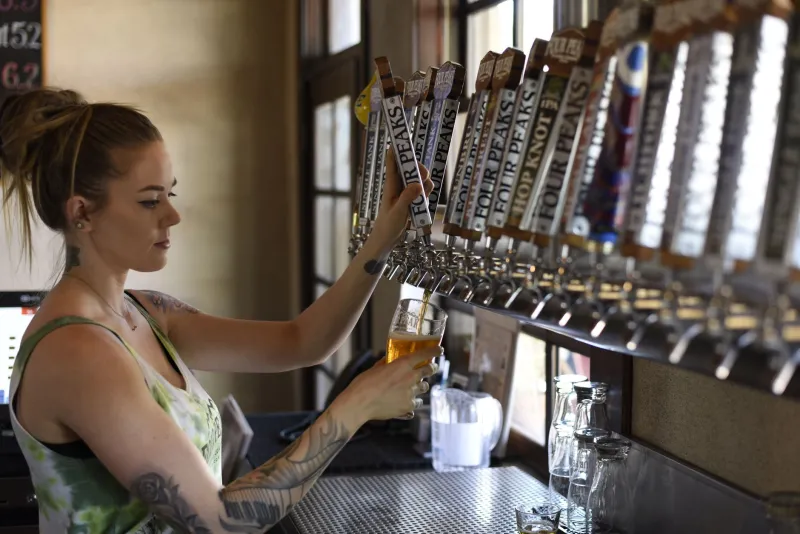
There's a moment every experienced brewer knows. The taproom is buzzing, the crowd is three drinks deep, and something in the air shifts — subtly, almost imperceptibly. The lighting feels different. The conversations get louder, or maybe quieter. And without anyone saying a word, a good pour master already knows: it's time to pull something different.
It's not magic. But it's not purely science, either. It's something in between — a kind of accumulated wisdom that takes years of standing behind a bar, watching people drink, and paying very close attention to everything that isn't on the menu.
The Taproom as a Living Thing
Ask any brewer who's spent serious time running a taproom and they'll tell you the same thing: a bar crowd isn't static. It breathes. It shifts. And the best taprooms — the ones that feel effortless and alive — are run by people who treat that crowd like a conversation rather than a transaction.
"You walk in at 5 PM on a Friday and you've got a completely different energy than a Sunday afternoon," says Marcus Delray, head brewer at a small but well-loved operation out of Asheville, North Carolina. "Friday, people want to decompress. They're not looking for something challenging. They want something clean, cold, and familiar. Sunday? That's when the real beer nerds come out. That's when you can get weird with it."
This instinct — call it taproom literacy — is one of the least-talked-about skills in craft brewing. We spend a lot of time discussing fermentation chemistry, hop sourcing, and barrel programs. But the human side of the pour? That's just as nuanced, and arguably harder to teach.
Seasonal Cues and the Body Language of a Bar
Season plays an enormous role in how seasoned brewers approach their tap lists. And we're not just talking about the obvious stuff — pumpkin ales in October, wheat beers in July. It goes deeper than that.
A cold snap in late September can shift a crowd's mood overnight. People who were ordering IPAs last week suddenly want something with weight to it — a brown ale, maybe, or an early pour of the winter warmer that's been conditioning in the back. Conversely, an unexpected warm stretch in March can kill demand for stouts stone dead, even if the calendar says it should be stout season.
"Weather is basically my tap list co-pilot," laughs Dani Okonkwo, a taproom manager out of Denver who's been doing this for over a decade. "I've pulled kegs that were supposed to stay on all month because it hit 75 degrees and nobody wanted them anymore. You have to be flexible. Holding onto a plan too tightly is how you end up with a room full of people who aren't ordering."
Beyond weather, there's body language. Good taproom staff read physical cues the way a poker player reads tells. A group that's still in work clothes and nursing their first round is probably not ready for a 10% barrel-aged behemoth. A table that's been there for two hours, laughing loudly and leaning in close? They might be exactly ready for something unexpected.
The Psychology of the Nudge
There's real behavioral science underneath all of this intuition. Psychologists who study consumer behavior have long documented the concept of "choice architecture" — the idea that how options are presented, and in what context, dramatically shapes what people choose. Taprooms are, in effect, live laboratories for this.
A brewer who recommends a specific beer at the right moment isn't just making a suggestion. They're anchoring that customer's experience. They're creating a memory. And if the read was right — if the beer lands the way it was supposed to — that customer walks out feeling like the place just got them.
"People don't always know what they want until you hand it to them," says Delray. "My job isn't to push product. It's to figure out what's going to make someone's afternoon. When I get that right, they come back. When I get it wrong, they finish their drink and don't."
This is especially true with newer craft beer drinkers — people who are still building their palate vocabulary and don't quite have the language yet to articulate what they're after. A well-timed recommendation from someone who's actually paying attention can be a turning point. It's the moment a casual visitor becomes a regular.
Learning to Listen Without Words
So how do you actually develop this skill? The honest answer is: slowly, and through a lot of trial and error.
Most veteran pour masters describe a similar learning curve. Early on, you over-explain. You push your favorites. You default to whatever's new or whatever won an award. Eventually, you start listening more than you talk. You notice patterns. You realize that the couple celebrating something wants to be guided, while the solo drinker with a book wants to be left alone with something sessionable. You stop projecting your own taste and start reading the actual person in front of you.
"It took me probably three years to stop making it about what I thought was the best beer on the list," admits Okonkwo. "Once I let go of that, everything got easier. The conversation becomes less about beer specs and more about vibes. What are you in the mood for? What's been your day like? Sometimes that's all you need to know."
There's also a cumulative, almost archival quality to this kind of expertise. Every successful read adds to an internal database. Every misfire teaches you something. Over time, the pattern recognition becomes almost automatic — less deliberate thought and more trained instinct.
The Lucky Read
Here at Lucky Town, we've always believed that the best brewing isn't just what happens in the kettle. It's what happens when the right beer meets the right person at the right moment. That's not luck in the passive sense — sitting around hoping things fall into place. That's the kind of luck you build through attention, craft, and genuine care for the people on the other side of the bar.
The brewers and taproom managers who do this well aren't guessing. They're observing, processing, and acting on years of accumulated knowledge. They've put in the time to understand not just beer, but people — and that, more than any recipe or technique, is what makes a taproom feel like somewhere you belong.
Next time you walk up to a bar and someone hands you something you didn't ask for but somehow knew you needed — that's not a coincidence. That's a pro at work. Tip accordingly.