Stay the Course or Lose the Crowd: What Separates Lasting Breweries From Forgotten Ones
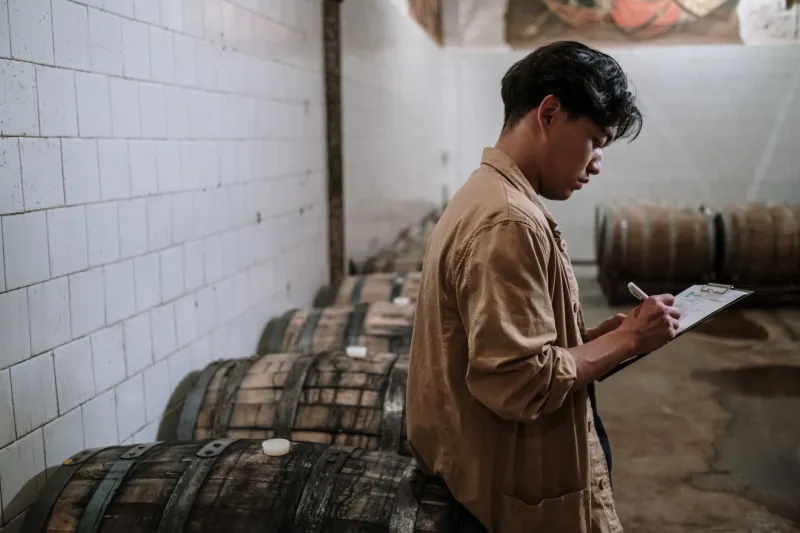
Somewhere around 2016, a small but well-regarded brewery in the Pacific Northwest made a decision that baffled a lot of people in its local beer scene. While nearly every other taproom in the region was scrambling to release a hazy IPA — the style was exploding, the Instagram engagement was undeniable — this brewery doubled down on its lagers. Clean, precise, almost stubbornly traditional German-style lagers that took twice as long to ferment and cost more to produce.
Six years later, that brewery had a year-long waitlist for its mug club. The hazy IPA shops? Several had closed. Others had pivoted so many times their tap lists looked like identity crises on draft.
This isn't a fluke. It's a pattern.
The Trend Trap Is Real — And It's Expensive
Craft beer trends move fast. Hazy IPAs, pastry stouts, hard seltzers, cold IPAs, smoothie beers, non-alcoholic everything — the industry churns out new categories the way fast fashion churns out seasonal collections. And for a small brewery operating on thin margins, the pressure to participate can feel almost existential.
The logic isn't crazy. If customers are asking for something, shouldn't you give it to them?
But here's the problem: by the time a small production brewery can develop, test, scale, and release a trend-chasing beer, the trend is often already cresting. The big regional players with larger R&D budgets got there first. And the brewery that just spent six months chasing the wave is now sitting on a recipe that feels dated before it even hits the tap.
More damaging than the wasted resources, though, is the identity erosion. Customers who loved you for your dry-hopped pale ales don't know what to make of your new line of fruit-forward sours. The regulars who drove forty minutes for your house IPA now find a tap list that looks like it was assembled by a committee trying to please everyone — which, in practice, pleases no one particularly well.
What 'Staying True' Actually Looks Like
It's worth being honest here: staying true to your vision doesn't mean refusing to evolve. The breweries that endure aren't frozen in amber. They experiment, they grow, they occasionally surprise their regulars with something unexpected. But there's a difference between evolution driven by genuine creative curiosity and pivoting driven by anxiety about market share.
Take the case of a small Texas brewery that built its entire brand around approachable, session-strength beers at a time when the craft world was obsessed with barrel-aged behemoths and double-digit ABVs. Plenty of industry voices told them they were leaving money on the table. They kept brewing 4.5% lagers and easy-drinking wheat beers, refined their process year over year, and eventually became the go-to for exactly the kind of drinker who was exhausted by the arms race toward more, bigger, stronger.
Or consider the East Coast farmhouse brewery that planted its flag in mixed-fermentation saisons during a period when that style had almost no mainstream commercial appeal. The owners weren't contrarians for the sake of it — they genuinely loved the style and understood it deeply. That depth showed in the beer. When farmhouse ales eventually had their cultural moment, this brewery wasn't scrambling to learn the category. It was the category, at least in its region.
The Grit Part Nobody Talks About
Conviction sounds romantic when you're talking about it in retrospect. In the moment, it mostly just feels like stubbornness, and sometimes it feels like stubbornness that might bankrupt you.
The breweries that hold their line through a slow quarter — when the brewery down the street is selling out of whatever the trending style is that month — are exercising a kind of discipline that doesn't get nearly enough credit. It requires genuine belief in what you're making, a clear understanding of who your customer actually is (versus who you wish they were), and the financial management to survive the stretches where you're not chasing volume.
It also requires honest self-assessment. There's a version of 'staying true to your vision' that's really just stubbornness in the face of legitimate market feedback. A brewery that refuses to acknowledge that one of its core recipes simply isn't working, or that its taproom experience has genuine problems, isn't being principled — it's being defensive. The distinction matters.
Why Customers Can Tell the Difference
Regular beer drinkers are more perceptive than the industry sometimes gives them credit for. They might not be able to articulate why a brewery feels authentic versus performative, but they feel it. And that feeling drives the behavior that actually sustains a business: repeat visits, word-of-mouth recommendations, the willingness to defend a brewery to skeptical friends.
When a brewery chases trends, customers sense the anxiety underneath it. The tap list feels reactive. The branding shifts. The staff, often the most honest reflection of a brewery's culture, seem uncertain about what story they're supposed to be telling.
When a brewery holds its course, something different happens. The staff knows the beers intimately. The tap list has a coherent logic. Even a first-time visitor can get a sense of what this place is about within ten minutes of walking in. That legibility — that sense of a real point of view — is exactly what creates the kind of loyalty that no marketing campaign can manufacture.
The Long Game Is the Only Game
The craft beer industry has now been around long enough to watch full cycles play out. Breweries that opened in the early 2010s riding the IPA wave and never developed an identity beyond 'we make IPAs' have largely struggled as the category became commoditized. Breweries that opened with a specific, genuine perspective — even a quirky or niche one — have disproportionately survived and, in many cases, thrived.
The lesson isn't that trends are bad or that you should ignore your customers. It's that the breweries worth knowing are the ones that figured out what they actually believed in and then committed to it, through slow seasons and skeptical reviews and the nagging voice that wonders whether the hazy IPA thing is going to last forever.
Spoiler: it didn't. But the lager brewery with the mug club waitlist is still very much open.
That's the real luck — not stumbling onto the right trend at the right moment, but building something with enough integrity that it doesn't need the trend to survive.