Never Knowing What's on Tap Next: The Secret Weapon Keeping Craft Beer Fans Hooked
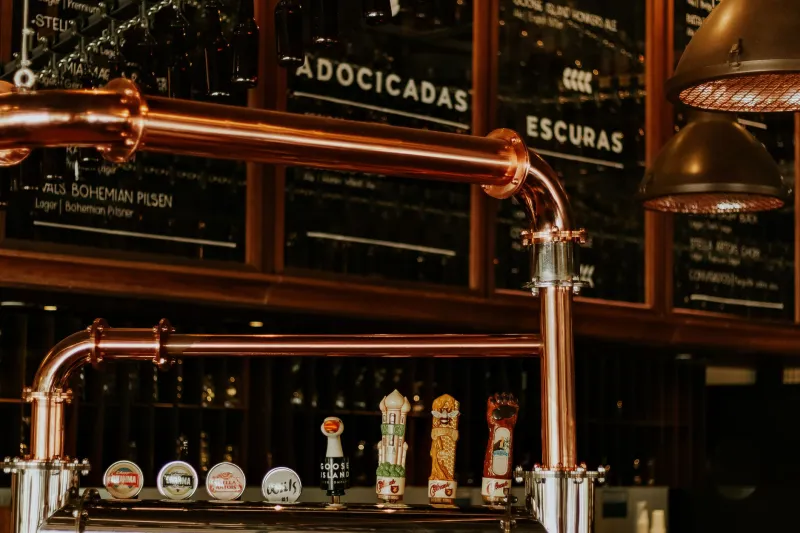
There's a particular kind of excitement that hits when you walk into your favorite taproom and the chalkboard doesn't look anything like it did last week. Half the beers you loved are gone. Three new ones you've never heard of have taken their place. And somewhere near the bottom, there's a tap handle labeled only with a question mark.
For some people, that's mildly annoying. For a growing number of craft beer fans across the country, it's the whole point.
The breweries that have figured this out — really figured it out — aren't just winging it. They've built entire customer experiences around the deliberate, carefully managed art of surprise. And the results, both in terms of foot traffic and community loyalty, speak for themselves.
The Psychology of the Unknown Pint
Human beings have a complicated relationship with uncertainty. We generally don't like it in our finances, our health, or our commutes. But in leisure? In entertainment? A little unpredictability is basically rocket fuel for engagement.
Psychologists call it variable reward reinforcement — the same principle that makes slot machines so compelling and social media feeds so hard to put down. When you don't know exactly what you're going to get, the anticipation itself becomes part of the pleasure. The brain lights up differently than it does when the outcome is already known.
Craft breweries, often without ever reading a psychology textbook, have been tapping into this for years. A rotating tap list isn't just practical — it's exciting. A surprise collaboration drop isn't just a business move — it's an event. The question mark on that tap handle isn't a gap in the menu; it's an invitation.
Rotating Taps: The Bread and Butter of Controlled Chaos
The most accessible version of this strategy is one that plenty of taprooms have already adopted: the rotating lineup. Rather than locking in a permanent menu of six or eight beers, these breweries keep things fluid. Core beers might anchor the board, but a significant portion of the taps turn over regularly — sometimes weekly, sometimes based on what just finished fermenting.
For regulars, this creates a compelling reason to come back often. You never quite know what's going to be pouring when you walk through the door. Seasonal ingredients, experimental styles, one-off pilot batches — all of it cycles through, and if you're not there, you might miss it entirely.
That fear of missing out, as overused as the acronym has become, is genuinely powerful. Breweries that lean into it aren't manipulating their customers — they're creating real value. A one-keg wonder that disappears on a Tuesday afternoon is genuinely rare. The urgency is legitimate.
Mystery Batches and the Art of the Unnamed Beer
Some breweries have taken the concept a step further with mystery ingredient batches — beers where the full recipe isn't disclosed until after the keg kicks. Maybe it's a seasonal fruit sourced from a local farm. Maybe it's an unusual adjunct the brewer has been experimenting with for months. The beer is real, the ingredients are real, but the reveal is part of the experience.
This approach does something smart: it turns the act of drinking a beer into a conversation. Regulars start speculating before they even order. "What do you think is in it?" becomes a taproom game. People describe what they're tasting, compare notes, argue good-naturedly about whether that's cardamom or coriander. The brewer becomes something like a puzzle-maker, and the community around the bar becomes a group of enthusiastic solvers.
It also positions the brewery as a place where interesting things happen — not just a spot to grab a cold one, but somewhere with a creative pulse that keeps beating in unexpected directions.
Guerrilla Releases and the Pop-Up Playbook
Then there are the breweries that have taken strategic unpredictability off the premises entirely. Guerrilla-style pop-up releases — announced with minimal lead time, held in unexpected locations, sometimes tied to local events or neighborhood institutions — have become a genuine community-building tool for savvy operations around the country.
A brewery might partner with a local coffee shop for a one-morning-only release of a coffee stout. Or show up at a farmers market with a single keg of something that's never been poured before and won't be again. Or drop a text alert to their most loyal regulars that a special batch will be tapped at 4 p.m. on a random Wednesday.
These moments generate a disproportionate amount of buzz relative to the effort involved. People who make it feel like insiders. People who miss it feel motivated to pay closer attention next time. And the story of "that time I was there for the pop-up" becomes part of the lore that regulars share with friends they're trying to recruit into the fold.
Surprise Collaborations: When Two Unpredictabilities Collide
Collaboration beers have been a craft industry staple for a while now, but the breweries getting the most mileage out of them are the ones treating each collab as an event rather than just a product. Surprise collaborations — announced close to release, or teased with minimal information — carry a particular kind of energy.
When two breweries known for distinct styles get together without telegraphing every detail in advance, the result lands differently than a beer that's been marketed for three months. The community gets to experience genuine discovery. The brewers get to take creative swings they might not take on a standard release. And the shared audiences of both breweries get an organic reason to connect.
Some of the most talked-about releases in recent craft beer history have been collaborations that came out of nowhere — or at least seemed to. The element of surprise made them feel more special, even when the beer itself might have been roughly comparable to what either brewery would produce solo.
The Line Between Chaos and Trust
None of this works without a foundation of quality. Strategic unpredictability is a loyalty amplifier, not a substitute for making good beer. Customers will follow a brewery into the unknown only as long as they trust that what's waiting on the other side is worth the trip.
The breweries that have cracked this code understand the balance intuitively. They keep a few reliable anchors on the board — the flagship IPA, the crowd-favorite lager — while letting everything else stay in motion. They don't change for the sake of change; they change because their brewers are genuinely curious and productive, and the tap list reflects that creative output honestly.
That authenticity is what separates strategic unpredictability from gimmickry. The question mark on the tap handle has to mean something. The mystery batch has to be worth guessing about. The pop-up has to be genuinely worth showing up for.
When it all comes together, the taproom stops being just a place to drink beer and becomes something closer to a living, evolving experience — one that rewards the people who show up regularly, pay attention, and stay curious.
And honestly? That's a pretty great reason to keep coming back.