Not Too Strong, Not Too Soft: The Real Science Behind Hitting the Right ABV
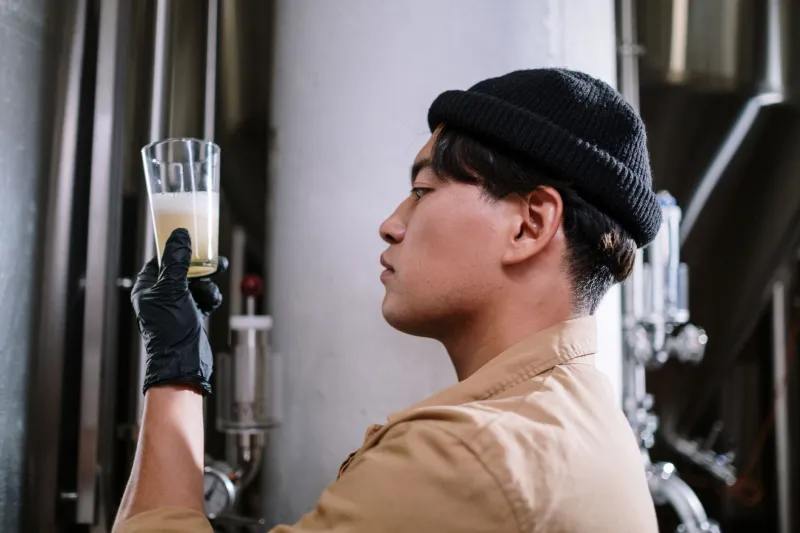
Walk into any well-stocked taproom and you'll find beers ranging from a breezy 3.8% session ale to a bruising 12% imperial stout that demands you sit down and respect it. That spread isn't random. Every single percentage point is the result of a brewer making deliberate calls about ingredients, fermentation, customer experience, and yes — cold, hard economics. At Lucky Town Brewing, we think about ABV a lot. Maybe more than most people realize.
So what actually goes into choosing where a beer lands on the alcohol spectrum? Turns out, it's part chemistry, part market savvy, and part gut instinct earned through years of standing over a mash tun.
It Starts With Sugar — Always
Before a single yeast cell does its thing, a brewer has to think about fermentable sugars. The more sugar available in the wort, the more the yeast has to eat, and the higher the resulting alcohol content. That sugar load comes primarily from malted grain — the ratio of grain to water, known as the grain bill, is the first lever a brewer pulls when targeting a specific ABV.
Here at Lucky Town, our head brewer describes it like this: "You're basically setting the ceiling before fermentation even starts. The grain bill tells you the potential. The yeast tells you how much of that potential gets realized."
Original gravity (OG) and final gravity (FG) are the two measurements that bookend fermentation. OG tells you how much sugar is in the wort before yeast is pitched. FG tells you what's left after fermentation completes. The difference between those two numbers, run through a standard formula, gives you ABV. Simple in theory. Endlessly nuanced in practice.
Yeast Is Not a Passive Player
One thing casual beer drinkers often underestimate is just how much the yeast strain shapes the final alcohol content. Different strains have different attenuation rates — meaning some yeast will chew through nearly every available sugar, pushing ABV higher and leaving a drier beer, while others tap out earlier, leaving residual sweetness and a lower alcohol content.
This is where brewers have to get intentional. Choosing a high-attenuation yeast for a beer you want to land at 5% could blow past your target and produce something drier and stronger than intended. Choose a low-attenuation strain for a big imperial and you might end up with a cloyingly sweet, under-attenuated mess.
"We've had batches where the yeast just went rogue," one of our Lucky Town brewers admitted with a laugh. "You pitch thinking you're making a 6.5% IPA and the yeast has other plans. That's when you learn to take your gravity readings seriously."
Flavor Lives at the Intersection of ABV and Everything Else
Here's where the science gets genuinely fascinating. Alcohol isn't just a byproduct — it's a flavor carrier. Higher ABV beers tend to feel fuller in the mouth, carry aromatic compounds more expressively, and linger longer on the palate. That's why a well-made 9% barleywine can feel like a whole experience rather than just a beverage.
But that same intensity becomes a liability if the goal is sessionability. A beer meant to be enjoyed over a long afternoon at the taproom — the kind you can have two or three of without losing the thread of conversation — needs to sit in a range that keeps the drinker engaged without overwhelming them. That's typically the 4% to 5.5% zone, where hop character, malt backbone, and carbonation can shine without alcohol heat stealing the spotlight.
Our taproom regulars have strong opinions here, and we listen. The beers that move fastest on our draft list tend to cluster in that approachable middle ground. Not because we're playing it safe, but because drinkability is its own art form.
Shelf Stability and the Business Case for ABV
There's a practical dimension to all of this that doesn't always make it into the romantic storytelling around craft beer. Alcohol is a natural preservative. Higher ABV beers — your barrel-aged stouts, your double IPAs, your strong Belgian ales — have a longer viable shelf life than their sessionable counterparts. That matters enormously for distribution, retail placement, and any brewery thinking about sending product beyond its local market.
A 4% Kölsch is a beautiful thing, but it has a narrow window. A 10% imperial stout can age gracefully for years, which opens up different revenue possibilities — limited bottle releases, cellar programs, anniversary editions. At Lucky Town, we build our lineup with that spectrum in mind. Some beers are made to be consumed fresh and local. Others are built to last.
The economics also factor into pricing. Higher-gravity beers require more grain, more hops in some cases, and longer conditioning time. That cost gets reflected in what ends up on the menu board. Customers sometimes balk at paying more for a smaller pour, but the math is honest — a 10-ounce pour of a 10% imperial stout represents significantly more raw material than a pint of a session ale.
Reading the Room: Market Positioning and Consumer Expectations
No brewer operates in a vacuum. The craft beer landscape in the U.S. has shifted dramatically over the past decade, with sessionable beers staging a real comeback after years of the "bigger is better" arms race. Hazy session IPAs, low-ABV lagers, and even non-alcoholic craft options have found genuine audiences among drinkers who want flavor without the freight.
At the same time, there's still a robust market for the bold stuff. Taproom culture rewards breweries that push limits — the one-off double dry-hopped monster that sells out in a weekend, the barrel-aged release that people line up for. Lucky Town plays in both spaces, and the ABV decisions we make are partly about reading what our community is hungry for at any given moment.
"You have to know your crowd," our taproom manager puts it simply. "Friday night, people want something sessionable they can enjoy with friends for a few hours. Saturday afternoon release day? They want the big gun."
The Sweet Spot Is Wherever You Aim With Intention
There's no single perfect ABV. The sweet spot is a moving target that changes depending on the style, the season, the occasion, and the drinker. What stays constant is the intentionality behind the number — the understanding that every percentage point represents a choice, and every choice has consequences for flavor, experience, and the bottom line.
At Lucky Town Brewing, we've always believed that grit and precision aren't opposites. The best beers we've ever made weren't accidents. They were the result of knowing exactly what we were chasing and doing the math to get there — then trusting the process enough to let the beer tell us the rest.