Alive, Unpredictable, and Absolutely Essential: The Wild World of Yeast in Craft Brewing
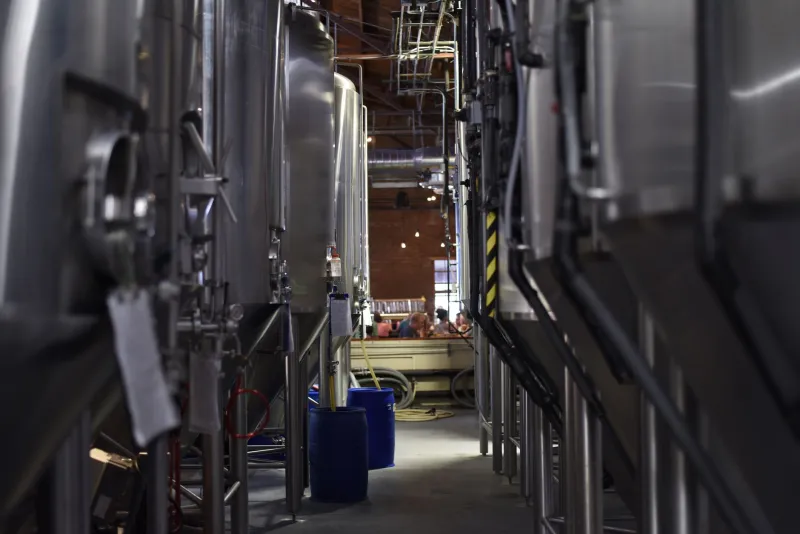
Ask any brewer what their most important ingredient is, and you'll get a passionate argument. Hop heads will defend their pellets and whole cones like family heirlooms. Malt lovers will wax poetic about barley varieties and roast levels. Water chemists — yes, they exist, and yes, they will find you — will launch into a twenty-minute lecture about mineral content.
But quietly, almost humbly, the ingredient that actually makes beer is doing its work in the background. Yeast doesn't just ferment wort into alcohol. It shapes aroma, builds flavor compounds, determines mouthfeel, and leaves a fingerprint on every batch that no other ingredient can replicate. And unlike hops or grain, yeast is alive. It has moods. It has preferences. Sometimes, it has opinions.
"People forget that yeast is a living organism," says Marcus Delray, head brewer at a small production brewery in Asheville, North Carolina. "You're not just adding a chemical to a reaction. You're essentially farming. You're managing a population of billions of microorganisms and hoping they do what you want."
Sometimes they don't.
Picking Your Partner: The Strain Selection Process
For most commercial craft breweries, the yeast journey starts with a catalog. Companies like White Labs and Wyeast have spent decades isolating, propagating, and packaging hundreds of distinct strains — each one with documented fermentation characteristics, temperature tolerances, and flavor profiles. A brewer designing a new hazy IPA will likely reach for a strain known for producing tropical esters and a soft, pillowy mouthfeel. Someone building a clean, crisp German lager needs a strain that ferments slowly at low temperatures without throwing off any fruity off-notes.
The science is real and well-documented. But the art? That's where things get interesting.
"I've brewed the same recipe with two different yeast strains and gotten beers that tasted like completely different products," says Jenna Torrance, co-founder and brewmaster of a taproom-focused brewery outside of Denver. "Same water, same grain bill, same hops. The yeast changed everything. The aroma, the finish, even the color looked slightly different once it cleared."
Strain selection isn't just about matching a yeast to a style. Experienced brewers develop intuitions — almost relationships — with certain strains. They know how a particular culture behaves when the fermentation temperature creeps up by two degrees. They know which strains need a little more nutrient support, and which ones will chew through a high-gravity wort without complaint.
When Things Go Sideways: Yeast Gone Rogue
For all the science and planning, yeast has a way of humbling even the most seasoned brewer. Contamination, mutation, and plain old stress can turn a reliable workhorse strain into a liability — fast.
Delray still talks about the batch he calls "the incident." A wild Brettanomyces contamination found its way into a fermenter that hadn't been fully sanitized after a barrel-aging experiment. The resulting beer — intended as a clean amber ale — came out tasting like a barnyard in the best possible way, if you're into that sort of thing. Half his regulars loved it. The other half wanted a refund.
"We had to make a call," he says. "Do we dump it or do we own it? We owned it. Sold out in a weekend. But we also spent three weeks deep-cleaning every surface in the brewery."
Contamination stories are almost a rite of passage in craft brewing. But there's a more insidious problem that doesn't always announce itself with dramatic off-flavors: yeast drift. Over time, as a culture is repitched batch after batch, the population can shift. Certain cells outcompete others. Genetic mutations accumulate. The strain you started with six months ago might not behave the same way it did when it came fresh from the lab.
"We do regular cell counts and viability checks," says Torrance. "But even with good practices, you'll notice a strain starting to behave differently after enough generations. Fermentation slows down. The ester profile shifts slightly. That's when you know it's time to retire that pitch and start fresh."
Growing Your Own: The Rise of House Yeast Cultures
For some breweries, the solution to yeast unpredictability isn't tighter control — it's going deeper into the wild. The trend of cultivating proprietary house yeast strains has gained serious momentum across the American craft scene, driven partly by a desire for differentiation and partly by genuine curiosity about what's floating around in the local air.
Open fermentation vessels, coolships, and spontaneous inoculation methods borrowed from Belgian lambic tradition are showing up in breweries from Vermont to Oregon. The idea is straightforward: expose your wort to the ambient microorganisms in your specific environment, and see what takes hold. The execution is anything but simple.
"We spent two years trying to isolate something worth keeping," says Daniel Okafor, who runs a small farmhouse-style operation in the Hudson Valley. "Most of what we caught early on was garbage. Acetic acid, weird metallic notes, stuff that was undrinkable. But eventually we found a strain that produced this gorgeous stone fruit character with a clean finish. That's our house culture now. It's literally from our land."
That kind of terroir-driven identity is increasingly valuable in a crowded market. When a brewery can say that its flagship saison or its wild ale contains a yeast that exists nowhere else on earth — a culture shaped by the specific microbiome of their building, their fields, their town — it creates a story no competitor can copy.
It also creates risk. House cultures require meticulous maintenance. They need to be protected from contamination, stored properly, and regularly evaluated to make sure the population stays healthy and consistent. Lose your house culture, and you lose part of what makes your beer yours.
The Future Is Fermentation
The science of yeast continues to evolve rapidly. Newer research into non-Saccharomyces strains — organisms like Lachancea thermotolerans and various Pichia species — is opening up flavor possibilities that traditional brewing yeasts simply can't produce. Some breweries are experimenting with mixed-culture fermentations that layer multiple organisms to build complexity. Others are working with university partners to sequence and study their house cultures at the genetic level.
But for all the technology creeping into fermentation science, most brewers will tell you that working with yeast still feels more like a relationship than a formula.
"You learn to read it," Torrance says. "The activity in the airlock, the way the krausen looks, the smell coming off the fermenter. After a while, you just know when something's off. And you know when everything's exactly right."
At Lucky Town, we've always believed that great beer comes from paying attention — to your ingredients, your process, and the living, breathing culture at the heart of every batch. Yeast doesn't get the glory. It doesn't show up on the tap handle or the label artwork. But pour a pint and take a sip, and it's there in every molecule.
Crafted with grit. Poured with pride. And fermented, always, by something alive.