Garage Legends: The Home Brewers Who Turned Basement Obsessions Into Real Craft Careers
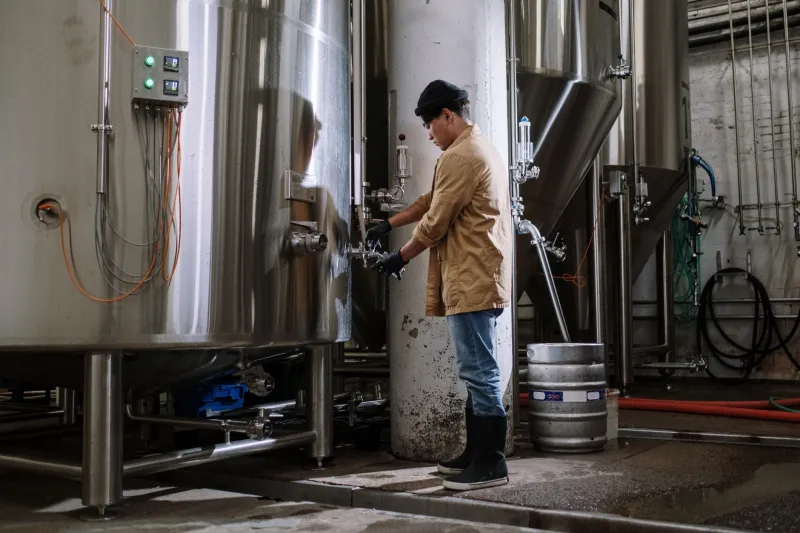
The origin story of American craft beer is, at its heart, a home brewing story. Before there were taprooms and mug clubs and merchandise drops, there were people in garages and basements and back patios, burning wort onto their stovetops and explaining to their families why the house smelled like a wet grain sack again.
That tradition is very much alive. And the home brewers operating today aren't just hobbyists — many of them are quietly becoming some of the most interesting voices in the craft world. We found seven of them, spread across the country, and asked them to tell us the real version of their story.
1. Marcus, Denver, CO — The Accidental Lager Nerd
Marcus started home brewing because his wife bought him a kit as a birthday gift in 2014. 'I made something genuinely terrible,' he says, laughing. 'It tasted like bread water.' But he was hooked on the process, and within two years he'd shifted his entire focus to lagers — a style notorious among home brewers for demanding temperature precision that most home setups can't reliably deliver.
He solved the problem by converting a chest freezer and building a custom temperature controller from parts he ordered online. The obsession paid off. In 2021, he was invited to collaborate on a recipe with a respected Denver nano-brewery after the head brewer tasted his Czech pilsner at a local homebrew club meeting. That collaboration beer sold out in a weekend.
Marcus hasn't gone fully commercial — he works in software and isn't sure he wants to. But he's consulted on three commercial lager recipes in the past two years. 'The home brewing world taught me that constraints force creativity,' he says. 'You can't just throw money at a problem. You have to actually understand the beer.'
2. Deja, Atlanta, GA — Building Community One Batch at a Time
Deja started brewing in 2018 partly out of frustration. 'I was going to these craft beer events and I rarely saw people who looked like me,' she says. 'I figured if I was going to be in this world, I might as well bring people with me.'
Her home brewing operation became the anchor for an informal brewing collective she started in Atlanta's West End neighborhood, eventually growing to about thirty members. The collective has produced a rotating series of beers that get served at local pop-ups and community events. No commercial license, no taproom — just a network of people learning together.
But the influence has been real. Two members of her collective have since launched professional careers in brewing. A third is in the process of opening a nano-brewery. Deja herself is developing a recipe book focused on brewing with ingredients sourced from Black-owned farms in the Southeast. 'Home brewing gave me the technical foundation,' she says. 'The community gave me the reason to keep going.'
3. Pete and Rosario, Portland, OR — The Couple Who Turned a Disagreement Into a Recipe
Pete likes big, bitter West Coast IPAs. Rosario thinks they taste like drinking a pine tree. When they started brewing together in their Portland apartment in 2017, the creative tension was immediate — and productive.
Their compromise beers, which they describe as 'West Coast structure with East Coast softness,' developed a small but devoted following after they started sharing bottles with neighbors. A local bottle shop owner who lived on their block tasted one and asked if they'd ever considered scaling up.
They launched a licensed nano-brewery out of a rented commercial kitchen in 2022. They're still small — about 150 barrels a year — but they've got distribution in four Portland accounts and a waiting list for their direct-to-consumer allocation. 'We argue constantly about recipes,' Pete says. 'It turns out that's a feature, not a bug.'
4. Terrence, Birmingham, AL — The Science Teacher Who Took It to School
Terrence is a high school chemistry teacher who started home brewing as a way to make his lessons more tangible. 'Fermentation is just applied biochemistry,' he says. 'I started using my own brewing process as a classroom example, and then I got obsessed with the chemistry side of it.'
His obsession led him to develop unusually precise documentation practices — water chemistry adjustments, mash temperature logs, yeast pitch rate calculations — that most home brewers at his level don't bother with. Those records became the foundation for a blog that now has a dedicated following among technically-minded home brewers nationwide.
He hasn't gone commercial, and he's not sure he wants to. But he's been invited to speak at three homebrew conferences and has consulted informally with two Alabama breweries on fermentation troubleshooting. 'The goal was never to open a brewery,' he says. 'The goal was to understand the thing completely. That's still the goal.'
5. Lily, Minneapolis, MN — The Seasonal Obsessive
Lily brews only seasonally. Winter means dark, roasty beers built for Minnesota cold. Spring means something bright and herbal. Summer is all wheat and citrus. Fall is where she gets weird — she's been experimenting with locally foraged ingredients for four years, with varying results.
'I made a beer with chokecherries and stinging nettle that was genuinely undrinkable,' she admits. 'I also made one with wild rice and honey that I'm still kind of proud of.' That wild rice beer caught the attention of a Minneapolis craft brewery looking for recipe ideas for a Minnesota-sourced series. They licensed the recipe from her and released it last fall to strong reviews.
Lily now does occasional paid recipe consulting for two regional breweries. She's also working on a homebrew-focused newsletter about foraging for brewing ingredients in the upper Midwest. 'Home brewing is the only place where you can be completely weird without consequences,' she says. 'That weirdness is worth protecting.'
6. Greg, Asheville, NC — The Failure Collector
Greg keeps a binder. In it are detailed notes on every batch he's ever brewed that didn't work — off flavors, missed gravities, contamination events, structural failures. He calls it his 'failure museum' and refers to it more than his success notes.
'The batches that went wrong taught me more than any book,' he says. After seven years of home brewing in Asheville, he parlayed his obsessive process documentation into a position as a quality control assistant at a mid-size regional brewery. He's now their lead QC technician.
'I never planned a career in beer,' he says. 'I just couldn't stop trying to figure out why things went wrong. Turns out that's a pretty valuable skill in a production environment.'
7. Carmen, San Antonio, TX — Brewing Her Heritage
Carmen started home brewing as a way to recreate beers she remembered from trips to visit family in Mexico — styles that were almost impossible to find in American craft beer culture. Her work with traditional Mexican brewing ingredients and techniques has led to a line of home brews that regularly generates waiting lists among her extended friend network.
She's currently in the planning stages for a licensed microbrewery focused entirely on Mexican-heritage beer styles. 'There's a whole tradition here that American craft beer has basically ignored,' she says. 'I'm not the only one who wants to drink it. I just might be the one who opens the door.'
What All Seven Have in Common
Ask any of these brewers what made the difference and you'll hear variations on the same answer: time, failure tolerance, and an almost irrational attachment to getting the thing right. None of them got here by following a straight line. None of them had a five-year plan that worked out exactly as written.
What they did have was a garage, a weekend, and the kind of stubbornness that refuses to accept a bad batch as a final answer.
That's where craft beer comes from. It always has been.