No Hype Required: Why the Best Taprooms Earn Your Loyalty Before You Even Finish Your First Pint
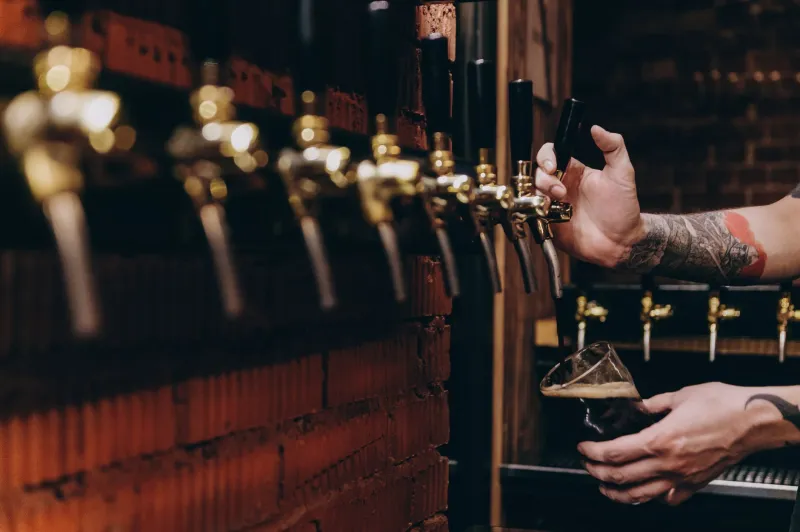
Let me describe two taprooms.
The first one you've probably seen on social media. It has a merchandise wall near the entrance. The tap handles are custom-fabricated and photogenic. There's a branded hashtag on a chalkboard by the door. Every couple of months, they announce a hyped limited release that sells out in under an hour — not because there's so little of it, but because the scarcity has been carefully engineered. The Instagram account has fifty thousand followers.
The second one is harder to describe, because nothing about it is particularly designed to be described. The tap list is handwritten. The bar stools are slightly mismatched. The person who poured your beer asked what you were in the mood for before suggesting anything. You went home and told three friends about it without being prompted by a notification.
Both of these taprooms exist all over America. And while the first one might generate more content, the second one is almost always still open five years later.
The Difference Between Buzz and Reputation
Buzz is fast and cheap to generate, at least in the short term. A well-timed social media post, a carefully orchestrated can release, a celebrity endorsement, a strategic partnership with a local sports team — these things move product. They get people in the door once.
Reputation is built differently. It accumulates through the hundred small interactions that happen every day in a taproom: the bartender who remembered your name on your third visit, the beer that was exactly what you needed after a rough week, the event that felt like a real community gathering rather than a ticketed marketing activation. These things don't photograph as well. They don't generate immediate analytics. But they compound over time in a way that buzz simply cannot.
The craft beer drinker who found their brewery through a viral moment and the one who found theirs through a friend's enthusiastic recommendation are not the same customer. The second one is harder to acquire and almost impossible to lose.
What 'Genuine Hospitality' Actually Means
Hospitality has become something of a buzzword in the food and beverage industry, which is ironic, because genuine hospitality is precisely the thing that can't be buzzified. You can mandate a greeting script. You can't mandate the warmth that makes a guest feel like their presence is welcome rather than processed.
In the taprooms that earn real loyalty, hospitality shows up in small, un-choreographed ways. It's the bartender who notices you've been nursing the same half-pint for twenty minutes and asks if you'd like to try something else before committing. It's the brewer who comes out from the back and talks about a new batch not because they're supposed to do a 'brewer's table' event, but because they're genuinely excited and wanted to share it. It's the honest answer to 'what's your best beer right now?' — which is a question that deserves a real opinion, not a menu recitation.
None of that can be packaged or replicated at scale. It emerges from a culture that the people running the brewery have either built deliberately or failed to build, and customers experience it immediately, even when they can't name what they're experiencing.
The Performative Community Problem
There's a particular kind of brewery marketing that has become increasingly visible in recent years — let's call it performative community engagement. It looks like sponsoring every local charity event. It looks like posting about 'giving back' with the same frequency as announcing new releases. It looks like partnerships with local organizations that seem to exist primarily as content.
Beer drinkers are good at detecting this. Not because they're cynical, but because they have a reference point: they know what genuine community investment looks like from the breweries that actually practice it. When a brewery hosts a fundraiser and the owners are there for the whole thing, not just the photo opportunity, people notice. When a taproom becomes a regular gathering place for a neighborhood group not because the brewery marketed itself that way but because the space felt welcoming enough to make it happen organically — people notice that too.
The difference between manufactured and genuine community connection isn't always obvious in a single interaction. But over time, it becomes unmistakable. The brewery that shows up for its community consistently, without making a production of it, builds a kind of goodwill that no PR budget can replicate.
Consistency Is a Form of Respect
Here's an unpopular truth in an industry that celebrates novelty: most beer drinkers, most of the time, want to drink something they already know they like. The hype around limited releases and rotating tap lists is real, but it represents a relatively small segment of the drinking population. The much larger group is the one that comes in on a Tuesday evening, orders the thing they always order, and would be genuinely disappointed if it wasn't there.
Consistency — in beer quality, in service, in the general feeling a taproom produces — is one of the most underrated loyalty drivers in the business. It communicates something important to a customer: we take this seriously enough to do it the same way every time. You can count on us.
That message doesn't require a marketing campaign. It gets delivered through the beer in the glass, the experience at the bar, and the feeling a customer carries out the door. When it's present, it generates the most powerful marketing tool available to any small business: a person who tells their friends.
The Word-of-Mouth Math
Industry research on word-of-mouth marketing consistently shows that personal recommendations carry more weight than any form of paid advertising, by a significant margin. In the craft beer world, where the product is experiential and the relationship between drinker and brewery is often personal, this effect is amplified.
The breweries that have built the deepest, most durable customer bases in the US — the ones with multi-year waitlists for their clubs, the ones that regulars will drive past four competitors to visit — have almost universally done it the same way. They made something they were genuinely proud of. They treated every person who walked through the door like their presence mattered. They showed up consistently, without making a spectacle of it.
No gimmick required. No hype machine necessary. Just the slow, unglamorous, deeply satisfying work of building something real.
The Pride Part
There's a reason 'poured with pride' resonates in craft beer culture. Pride is exactly what distinguishes a beer that was made to meet a trend from one that was made because the brewer believed in it. Customers taste the difference — not always consciously, but reliably.
And that pride extends beyond the beer. It shows up in how a taproom is maintained, how staff are treated, how a brewery handles a bad batch or a difficult customer or a slow month. The places that lead with pride — not arrogance, not performance, but genuine investment in what they're doing — are the places that earn the kind of loyalty that doesn't need to be manufactured.
The best taprooms in America aren't the ones with the longest lines on release day. They're the ones where the regulars show up on a random Wednesday, sit at the same stool they always sit at, and feel, without quite being able to say why, that they're exactly where they're supposed to be.
That's not luck. That's craft.