No Guarantees in the Hop Yard: How Craft Brewers Bet on Nature Every Single Year
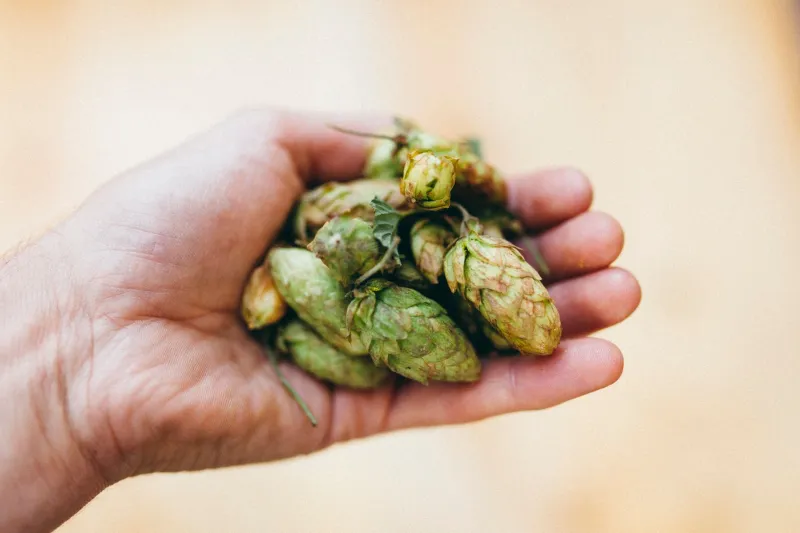
There's a moment every fall that brewers know well. The harvest reports start coming in from the Yakima Valley, from the Willamette, from the smaller regional farms scattered across the country — and the news isn't always what you were counting on. Alpha acid numbers are down. A particular variety got hit hard by aphids. The drought pushed harvest two weeks early and the cones aren't where they need to be. For home brewers, that might mean a shrug and a substitution. For a craft brewery trying to keep a flagship IPA tasting exactly the way it did last October? That's a legitimate crisis.
Hop farming is agriculture, and agriculture doesn't care about your production schedule.
Why Hops Are the Wild Card No Brewer Can Fully Tame
Hops are finicky in a way that even experienced growers will tell you is almost personal. They're perennial bines — not vines, bines, a distinction hop nerds will correct you on immediately — and they take years to fully establish before a yard hits its stride. Once they're producing, they're extraordinarily sensitive to everything: soil composition, irrigation timing, temperature swings during the critical cone-development window, even the direction the wind blows during pollination season.
The alpha acid content of a hop — the compound most directly responsible for bitterness in beer — can swing dramatically from one harvest to the next on the same farm, sometimes even within the same field. A Cascade hop that tested at 6.5% alpha acids last year might come in at 5.1% this year. That doesn't sound like much until you're scaling a 15-barrel batch and your bittering calculations are suddenly off. Your beer tastes rounder, softer, less assertive. Or you compensate too aggressively and overshoot in the other direction.
Then there's the aroma and flavor oil profile, which is arguably even harder to predict. The compounds that give hops their distinctive character — myrcene, linalool, geraniol, humulene — shift based on harvest timing and drying conditions. A hop that smelled intensely of citrus and tropical fruit in a previous year might lean more herbal and earthy the next. Same variety, different personality.
The Sourcing Puzzle: Contracts, Spot Markets, and a Lot of Phone Calls
Smart breweries don't just show up in October and hope there's something left on the shelf. The most prepared operations lock in multi-year contracts with hop brokers and growers well in advance — sometimes 18 to 24 months out — guaranteeing volume at a fixed price. It's a hedge against shortage, and it works, right up until the variety you contracted gets devastated by powdery mildew and the grower can only deliver 60% of what was promised.
The spot market is the backup plan, and it's a chaotic one. When a popular variety has a rough year, every mid-sized brewery in the country is suddenly scrambling for the same limited supply. Prices spike. Allocations shrink. Relationships matter enormously — brewers who've built genuine connections with their hop suppliers over years get the call first when inventory gets tight. The ones who only show up when they need something tend to get left out.
Smaller craft operations often can't play the long-contract game the way larger regional breweries can. They're buying in quantities that don't always make multi-year agreements practical. That puts them in a trickier spot, but it also forces a kind of creative flexibility that some brewers have turned into a genuine strength.
Pivoting Mid-Season Without Losing Your Audience
Ask any brewer who's been through a tough hop year and they'll have a story. Recipes get reworked on short notice. A house IPA that's been built around a specific Mosaic and Citra blend suddenly needs a supporting cast because one of those varieties came in short or off-profile. The question is how you handle it without your regulars noticing — or without making them feel like they're drinking something different.
Some brewers lean into transparency. They'll post on social media, put a chalkboard note in the taproom, explain that this batch features a slightly different hop bill because of harvest variability. For a certain kind of beer drinker — the curious, engaged regular who actually wants to understand what's in their pint — that kind of honesty builds trust. It reinforces the idea that you're drinking something genuinely handcrafted, not factory-produced.
Other operations take a more technical approach, working backward from the sensory profile they're trying to hit and substituting varieties that can approximate the missing character. A brewer short on a tropical-forward variety might layer in a combination of two others that together get them close to the same place. It requires a deep knowledge of individual hop character and how varieties interact in a blend — not something you figure out in an afternoon.
The brewers who handle these pivots best tend to be the ones who treat hop selection as an ongoing education rather than a fixed formula. They're tasting raw hops, visiting farms when they can, paying attention to pre-harvest reports from the trade organizations that track growing conditions across major hop-producing regions.
The Case for Regional and Experimental Varieties
One of the more interesting responses to hop supply volatility has been a growing interest in regional and experimental varieties. The Pacific Northwest still dominates American hop production by a wide margin, but there's meaningful acreage developing in places like Michigan, New York, North Carolina, and Colorado. These hops often have distinct regional character — influenced by local soil and climate — and buying from closer farms can simplify the supply chain and reduce exposure to West Coast weather events.
Experimental varieties, released by the USDA or by private breeding programs, offer another kind of hedge. A brewer willing to take a chance on a new variety before it becomes widely sought-after can lock in supply before demand drives the price up and availability down. It's a gamble, but for breweries that position themselves as exploratory and forward-thinking, it fits the brand.
Luck Has Nothing to Do With It — Except When It Does
Here's the honest truth: no amount of preparation fully eliminates the element of chance in hop sourcing. A late-season hailstorm doesn't care how good your contracts are. A particularly brutal summer in the Yakima Valley affects everyone, regardless of how many relationships you've built or how carefully you've diversified your variety portfolio.
What preparation does is shrink the blast radius. It means that when the bad news comes — and eventually, it always comes — you've got options. You've got backup varieties already in the cooler. You've got a relationship with a broker who'll go to bat for you. You've got a team that knows how to rework a recipe without losing the soul of the beer.
At Lucky Town, we've always believed that craft beer is fundamentally about people who care enough to figure it out, no matter what nature throws at them. Hop harvest season is where that belief gets tested every single year. The brewers who come through it with their beer — and their reputation — intact are the ones who treated it as a challenge worth preparing for, not a problem they hoped they'd never have to face.
That's not luck. That's just doing the work.