Your Tongue Isn't Lying to You — But It Might Need More Practice
Picture this: a brewer pulls a sample from a conditioning tank, holds it up to the light for maybe three seconds, takes one long sniff, and then says, "Something's off with the fermentation." No instruments. No lab report. Just a nose that's been doing this for fifteen years.
To a casual beer drinker, that kind of thing looks like magic. It isn't. It's pattern recognition built through thousands of repetitions — and understanding how it works might change the way you think about every pint you order.
Why Your Brain Does Most of the Tasting
Here's the part most people don't expect: flavor perception is less about your mouth and more about your brain. Your tongue can detect five basic tastes — sweet, salty, sour, bitter, and umami. That's it. Everything else you think you're "tasting" — the tropical fruit in a hazy IPA, the toasted caramel in a märzen, the faint vanilla in a barrel-aged stout — is actually your olfactory system doing the heavy lifting.
Retronasal olfaction, the process where aroma compounds travel from the back of your mouth up into your nasal cavity as you swallow, accounts for somewhere between 70 and 90 percent of what we experience as flavor. This is why a bad head cold makes everything taste like cardboard. Your tongue is fine. Your nose is offline.
Professional brewers and certified cicerones know this intimately. Their training focuses heavily on smell — building what researchers sometimes call an "aroma vocabulary" — before it ever gets to the actual tasting component. They learn to attach words and memories to specific volatile compounds so that when those compounds show up in a beer, their brain flags it immediately.
The Training That Separates the Experts
Blind tasting is where a lot of the serious development happens. Strip away the label, the color of the glass, even the color of the beer itself in some exercises, and you're left with nothing but sensory data. It's humbling work. Experienced brewers will tell you that their first blind tasting sessions were genuinely disorienting — beers they'd made dozens of times suddenly felt unfamiliar without the visual and contextual cues they'd been unconsciously relying on.
That reliance on context is a well-documented psychological phenomenon. Studies on wine tasting have shown that people consistently rate the same wine higher when it's served in a more expensive-looking bottle. Beer drinkers are just as susceptible. The glassware, the tap handle, the name on the chalkboard menu — all of it primes your brain before the liquid ever touches your lips. Blind tasting is the practice of dismantling that scaffolding and seeing what's actually underneath.
Many professional tasters also use flavor wheel tools, like the Beer Flavor Wheel developed in collaboration with brewing industry organizations, to build a shared vocabulary. When everyone in the room agrees that "catty" means one specific sulfur compound and "astringent" means a specific drying sensation, communication becomes precise. You stop arguing about whether something tastes "weird" and start identifying exactly what compound is responsible and why it got there.
The Off-Flavor Education Nobody Talks About
One of the more counterintuitive parts of brewer training is that a significant chunk of it involves tasting bad beer on purpose. Flavor-spiking kits — where known compounds like diacetyl (buttery), acetaldehyde (green apple), or trans-2-nonenal (wet cardboard) are added to a neutral base beer at measured concentrations — teach tasters to recognize defects before they become problems.
This might sound like punishment, but it's actually one of the most efficient ways to build sensory memory. Once your brain has consciously catalogued what oxidation smells like at a low threshold, you'll catch it in a finished product before most drinkers ever notice. It's the difference between a quality control process and a guessing game.
For home brewers and enthusiastic beer fans, there are consumer versions of these kits available, and some craft brewery events — including occasional educational nights at taprooms — walk attendees through exactly this kind of structured tasting. If you ever see one on a local events calendar, it's worth showing up.
Practical Ways to Sharpen Your Own Palate
You don't need a lab or a certification program to start developing a more discerning sense of taste. A few habits, practiced consistently, go a long way.
Slow down and smell first. Before you take a sip, spend thirty seconds with your nose in the glass. Try to name what you're detecting — not just "hoppy" or "malty" but specific references. Does it remind you of grapefruit pith? Fresh-cut grass? Warm bread? The more specific you force yourself to get, the more your brain starts building connective tissue between language and sensation.
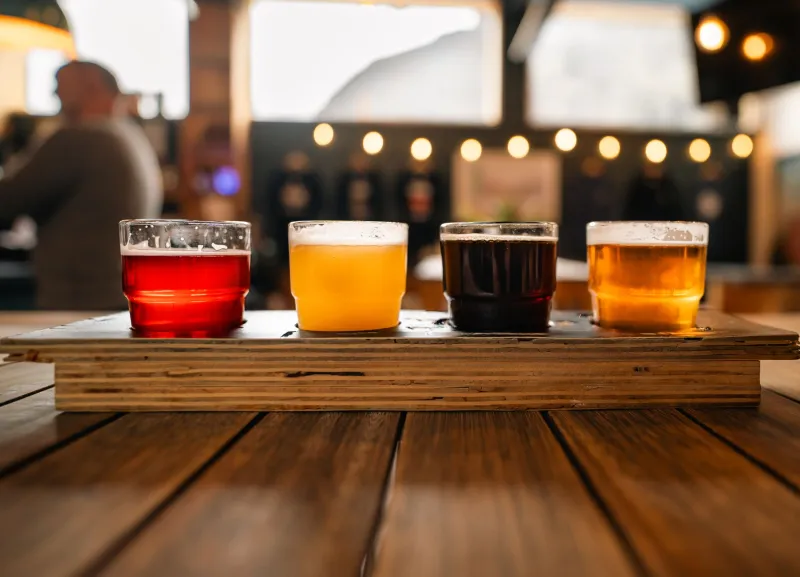
Drink in flights whenever you can. Tasting multiple beers side by side within the same style forces your palate to make comparisons rather than evaluations in isolation. You'll notice differences you'd never catch drinking one beer alone.
Keep a tasting journal. It sounds fussy, but writing down your impressions — even just three or four words per beer — creates a record that trains your attention over time. After six months, flip back through it. You'll be surprised how much your vocabulary and specificity have grown.
Seek out style diversity. If you drink nothing but West Coast IPAs, your palate gets calibrated to a very narrow range. Push into styles that challenge you — a Flanders red, a smoked porter, a dry Irish stout. Discomfort is where the learning happens.
Pay attention to finish. Most casual drinkers focus on the first impression of a beer and ignore what happens after the swallow. The finish — how flavors evolve and linger — is often where a beer's real complexity lives. Train yourself to notice it.
What the Gap Between Expert and Novice Actually Means
It's easy to feel a little self-conscious when a brewer starts talking about "noble hop character" or "estery phenolics" and you're still working out whether you like the beer or not. But here's the thing: that gap isn't a referendum on your palate. It's just a measure of practice.
Your taste buds aren't meaningfully different from those of a master brewer. What's different is the library of experiences their brain has built up to interpret the same signals you're receiving. That library was assembled deliberately, over time, through repetition and intentional attention.
The good news is that libraries are open to everyone. Every pint you drink with a little more focus, every flight you approach with a little more curiosity, every off-flavor you try to name instead of just dismiss — that's a new entry in your catalog. The brewers who seem to read their beer like a second language started exactly where you are.
They just kept showing up and paying attention.
So next time you're at the taproom and something in your glass makes you pause, don't brush past it. Sit with it. Describe it, even badly. That moment of deliberate attention is exactly how the invisible starts to become visible — one pint at a time.